Quick Answer
The clearest signs of mold in air ducts in New York are visible staining around vents or coils, a musty smell that intensifies when the HVAC system runs, standing water or wet insulation near the ductwork, and recurring respiratory symptoms that ease when occupants leave the home. No single sign confirms mold on its own, so New York guidance recommends a licensed inspector verify contamination before remediation begins.
About 70% of Long Island homes sit less than a few miles from tidal water, and every nor’easter, basement seepage event, or burst pipe adds moisture to the crawlspaces, attics, and duct runs that snake through them. That is why learning the real signs of mold in air ducts in New York matters more here than almost anywhere else in the country. Humid summers, aging housing stock, and coastal flooding combine to create ideal conditions for hidden growth inside HVAC systems.
This guide is not a sales pitch. It is a plain-language reference for homeowners from Nassau to Suffolk who want to know what to actually look for, what New York regulations require, and what a trustworthy contractor does differently before ever recommending cleaning or remediation.
Why Does Mold in Air Ducts Matter for Long Island Homes?
Air ducts move conditioned air through nearly every room in a house, which means any contamination inside the system can circulate spores, debris, and odors throughout the living space. The U.S. EPA’s updated guidance, revised in 2026, is notably conservative: it does not recommend routine duct cleaning, and instead says cleaning is warranted only when there is substantial visible mold, pest contamination, or heavy debris inside the HVAC system, according to the EPA’s official duct cleaning guidance.
That distinction matters. Not every dusty vent or musty basement smell means your ducts need professional remediation. But ignoring real warning signs, especially after a flood or a leaky roof, can allow a small contamination problem to spread through return air paths into bedrooms, kitchens, and finished basements across Levittown, Hempstead, Babylon, and beyond.
What Are the Visible Signs of Mold in Air Ducts?
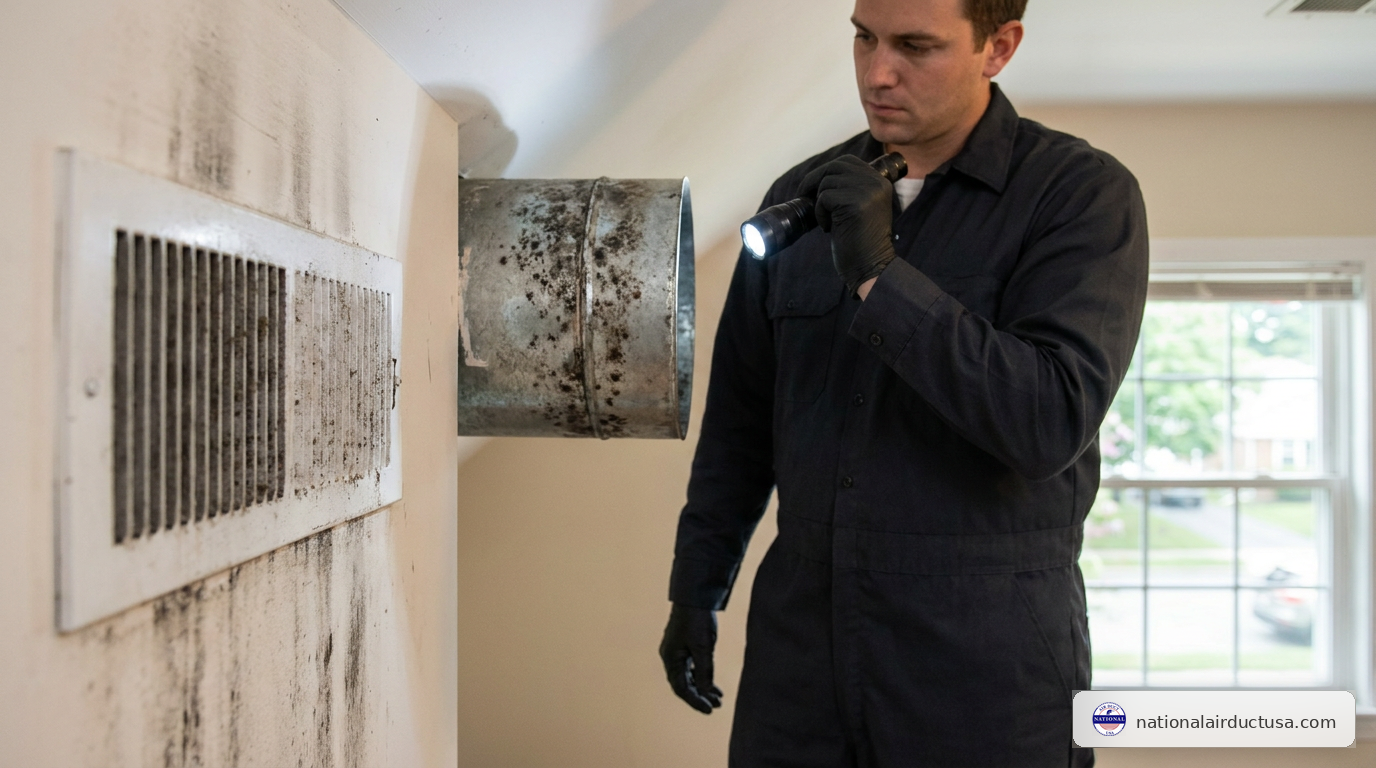
Visible evidence is the most reliable sign, but it requires looking in the right places. Homeowners rarely see inside the ducts themselves without removing a grille or panel, so start with these accessible components:
- Supply and return grilles: Dark speckling, green film, white fuzzy patches, or orange-tinted staining around the metal or plastic register.
- Air handler and blower compartment: Growth on the interior cabinet walls, especially near seams or insulation.
- Evaporator coil cabinet: A chronically damp coil compartment is one of the most common contamination points in central AC systems.
- Drain pans and condensate lines: Standing water, slime, or clogged lines that back up and stay wet for days.
- Duct insulation (duct liner or external wrap): Wet, sagging, or stained insulation that has lost its shape.
Not every stain is mold. Dark streaking can be ordinary dust deposition from a leaky seam, and orange tint can be mineral residue from hard water. But repeated growth in a chronically damp location is a strong warning sign that should prompt a professional look, particularly in systems serving finished basements, which are common throughout Long Island’s older housing stock.
How Do Smell and Health Symptoms Point to Duct Mold?
A persistent musty or earthy odor that intensifies the moment your heating or cooling system kicks on is one of the most consistent indicators homeowners report. That pattern suggests the smell source sits near the blower, coil, filter, or return side of the system rather than somewhere unrelated in the house.
Health complaints can reinforce suspicion but should never be used alone to diagnose contamination. Nasal congestion, sneezing, eye irritation, sore throat, cough, wheezing, or worsening asthma are all associated with damp, moldy environments according to the CDC’s guidance on dampness and mold-related respiratory effects. If symptoms consistently ease when household members leave the home for a few days, such as during a weekend trip, that pattern is worth mentioning to an inspector. For a deeper look at this connection, see our guide on whether dirty air ducts can make you sick.
What Moisture Sources Cause Mold in New York Ductwork?
Mold needs sustained moisture, and New York’s climate provides no shortage of sources. The most common culprits found during inspections across Nassau and Suffolk counties include:
- Condensation on uninsulated metal ducts running through humid crawlspaces or attics during summer months.
- Roof and plumbing leaks that drip onto duct runs for weeks before being noticed.
- Coastal flooding and storm surge affecting basements and first-floor mechanicals in low-lying areas near the South Shore.
- Clogged condensate lines that let water pool in drain pans or back up into the duct system.
- Basement seepage common in older homes with aging foundations and minimal perimeter drainage.
The EPA recommends drying wet building materials within 24 to 48 hours of any water event to significantly reduce the chance of mold taking hold, a standard detailed in the EPA’s mold and your home reference. If your system has experienced water intrusion and you’re noticing ongoing drips or wet spots, our article on why your ducts are leaking water walks through common causes and fixes specific to Long Island homes.
| Sign Observed | Likely Cause | Action Needed |
|---|---|---|
| Musty smell on startup | Damp coil, filter, or blower compartment | Professional inspection |
| Dark staining on grille | Condensation or dust buildup | Visual confirmation, possible cleaning |
| Standing water in drain pan | Clogged condensate line | Immediate HVAC service |
| Symptoms ease away from home | Possible indoor dampness exposure | Indoor air quality assessment |
What Does New York Law Require Before Remediation?
New York’s mold-remediation framework is based on contamination size and building type, not guesswork. For HVAC systems with more than 10 square feet of visible mold contamination, or occupied areas showing more than 100 square feet of surface contamination, New York specifications require an initial assessment and written report from a New York State Department of Labor-licensed mold inspector or assessor, as outlined in the state’s own mold remediation and disposal specification.
For suspected HVAC contamination specifically, the guidance calls for:
- Shutting down or isolating the HVAC system before any remediation work begins.
- Sealing affected vents and work areas with polyethylene sheeting to prevent spore migration.
- Removing contaminated porous materials, including moldy duct liner and filters, when they cannot be reliably cleaned.
- Using an independent, licensed inspector or assessor separate from the remediation contractor for objective verification.
This licensed, independent-verification structure exists to prevent conflicts of interest, where the same company that diagnoses a problem also profits from “fixing” it. New York’s building code further addresses duct system construction standards under the IRC 2024 duct systems chapter, which governs how ductwork must be sealed, insulated, and supported to limit condensation risk in the first place.
What Does a Trustworthy Inspection Process Look Like?
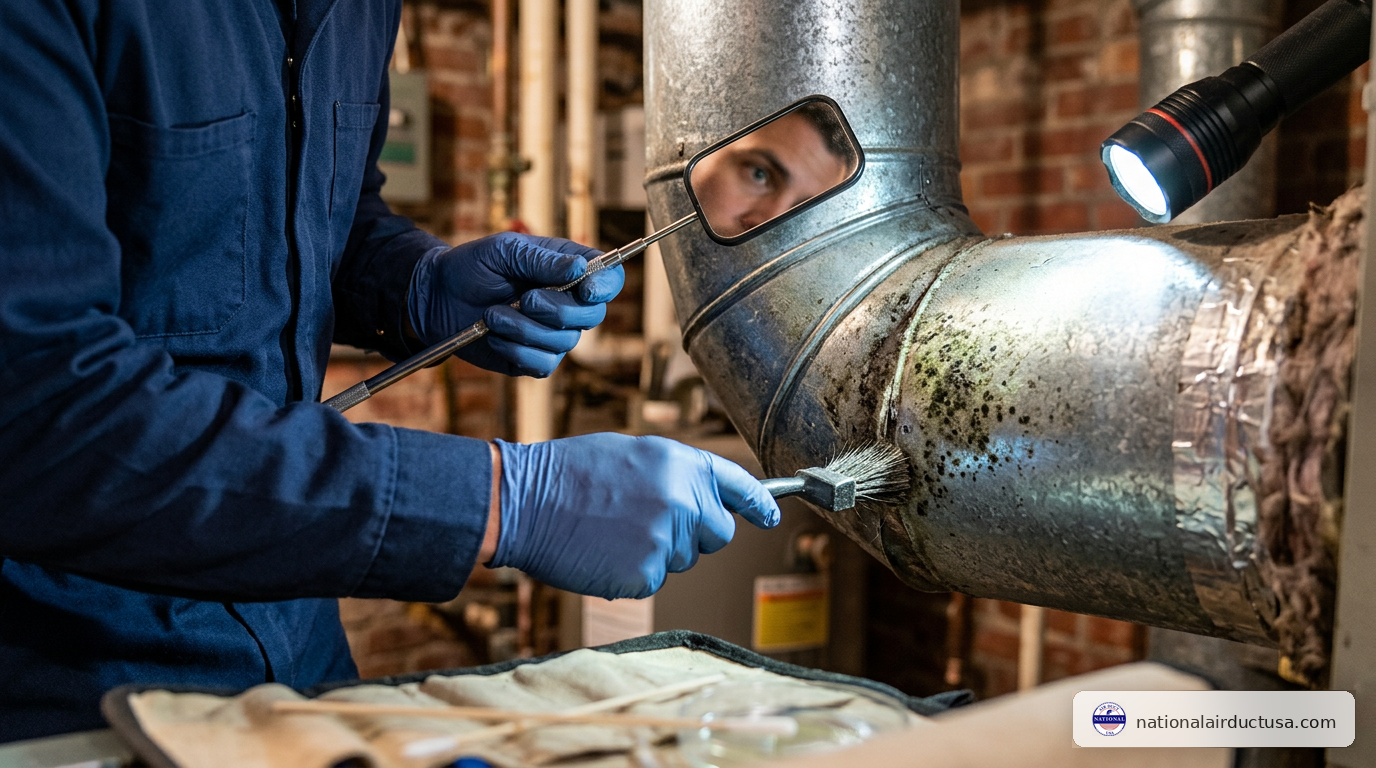
A reputable inspection does not start with a sales pitch. It starts with a camera, a moisture meter, and questions about your home’s history: recent leaks, basement flooding, past HVAC repairs, and when the filters were last changed.
A trustworthy process typically includes:
- Visual inspection of accessible duct sections, the air handler, coil cabinet, and drain pan.
- Moisture readings on insulation, duct liner, and nearby framing.
- Photo or video documentation of any suspected growth before recommending next steps.
- A clear explanation of whether findings meet New York’s threshold for licensed assessment, or whether routine cleaning and monitoring is sufficient.
If the inspector recommends treatment, ask how they plan to kill spores at the source rather than just mask odor. Our detailed explainer on mold fogger treatment for AC ducts covers how antimicrobial fogging is used appropriately, and when it is not a substitute for physical removal of contaminated materials. For a broader look at how mold takes hold inside HVAC equipment generally, see our guide to mold in HVAC ducts.
How Do You Choose a Licensed, Safe Contractor?
Credentials matter more in mold work than almost any other home service category, because improper handling can spread contamination rather than contain it. Look for contractors who hold current New York State mold licensure and who follow NADCA’s industry standards, which you can cross-reference through the NADCA certified professional directory.
Issued by: NY DOL
Separate from: remediation contractor
Barrier method: poly sheeting
Report type: written findings
A good contractor will also walk you through warranty terms in plain language: what’s covered if growth returns, how long the warranty lasts, and what maintenance (like filter changes or humidity control) is required to keep it valid. If you’re unsure whether your home even needs an inspection yet, review the broader signs you need air duct cleaning in New York before committing to a mold-specific assessment.
How Much Does Mold Inspection and Remediation Cost?
Pricing for mold inspection and duct remediation in New York varies widely, generally ranging from $300 to $50,000+ depending on scope. A single-system visual inspection with moisture readings sits at the low end, while full remediation involving contaminated insulation removal, containment, antimicrobial treatment, and post-remediation verification testing sits much higher.
Several factors drive the final number: square footage of contamination, whether porous materials like duct liner need replacement, accessibility of the ductwork, and whether an independent licensed assessor is required under New York’s thresholds. Pricing varies based on your specific project, so treat any flat quote given without an in-person or video inspection with skepticism. For a full breakdown of what’s typically included in professional service, see our complete 2026 guide to air duct cleaning and mold removal in New York.
Key Takeaways
- Visible growth, persistent musty odor, standing water, and symptoms that ease away from home are the four core categories of warning signs.
- No single sign proves mold contamination; combine evidence and get a professional opinion before assuming remediation is necessary.
- New York requires licensed assessment for HVAC contamination exceeding 10 square feet, with an independent inspector separate from the remediation company.
- The EPA does not recommend routine duct cleaning. It should be reserved for substantial visible mold, pests, or heavy debris.
- Drying wet materials within 24 to 48 hours after any leak or flood dramatically reduces mold risk.
- Ask contractors about containment procedures, licensing, and warranty terms before signing any agreement.
- Pricing depends on contamination size, material removal needs, and whether independent assessment is legally required.
People Also Ask
Can mold in air ducts make you sick?
Dampness and mold exposure are associated with nasal congestion, cough, wheezing, and worsened asthma symptoms according to CDC data, though duct contamination alone cannot be diagnosed from symptoms. A professional inspection is needed to confirm the source.
Does a musty smell always mean mold in the ducts?
Not always, but a musty smell that intensifies when the HVAC system starts is a strong indicator of contamination near the coil, blower, or filter. It warrants a professional look rather than assumption.
Is duct cleaning always necessary if I see dust coming from vents?
No. The EPA notes that dust or debris alone does not prove mold is present, and cleaning is only recommended for substantial visible contamination, pests, or heavy debris buildup inside the system.
How fast can mold grow after a flood in a New York basement?
Mold can begin establishing itself within 24 to 48 hours of sustained moisture exposure, which is why the EPA recommends drying wet materials within that window after any flooding or leak event.
Frequently Asked Questions
What are the earliest signs of mold in air ducts?+
The earliest signs are usually a faint musty smell on startup and minor staining around vent grilles or the air handler cabinet. Catching these early, before growth spreads to insulation or ductwork liner, typically keeps remediation smaller and less costly.
Do I need a licensed inspector for a small amount of mold?+
New York requires a licensed mold inspector or assessor when HVAC contamination exceeds 10 square feet or occupied-area contamination exceeds 100 square feet. Smaller, clearly identified spots may be addressed without full licensure, but a professional opinion is still wise.
Can I clean mold out of my ducts myself?+
DIY cleaning is not recommended for confirmed mold contamination, since disturbing spores without proper containment can spread them through the home. Porous materials like duct liner often need replacement rather than cleaning.
Why are Long Island homes more prone to duct mold than other regions?+
Long Island’s proximity to coastal water, humid summers, and prevalence of finished basements creates more moisture exposure points than drier inland climates. Storm flooding and seasonal condensation both add to the risk.
How often should ducts be inspected for mold risk?+
Most homes benefit from a visual HVAC inspection annually, or immediately after any flooding, leak, or long-term humidity issue. See our guide on how often you should clean air ducts in Long Island NY for a fuller maintenance schedule.
What should I ask a contractor before hiring them for mold work?+
Ask whether they hold current New York mold licensure, whether assessment and remediation are performed by separate parties as required for larger jobs, and what their warranty covers if growth returns. A transparent contractor will answer all three without hesitation.
Related: Air Duct Cleaning Mold Removal in Long Island, NY: A Step-by-Step Homeowner Checklist
Related: Post-Construction Deep Cleaning Services in Long Island NY: 2026 Cost Guide
If you’ve noticed any of these warning signs in your own home, don’t guess. Reach out to our team for a straightforward inspection, or learn more about our approach on our about us page. You can also start with National Air Duct’s home page to explore our full range of indoor air quality services, including guidance on improving indoor air quality across Long Island and specialized care like dryer vent cleaning and PTAC unit maintenance. A clear diagnosis today prevents a far costlier problem down the road.