
Quick Answer
IAC-Indoor Air Care professionals are certified specialists in Long Island, NY who inspect, clean, and restore HVAC systems, air ducts, and indoor spaces affected by mold, dust, and allergens. They combine duct cleaning, mold remediation, and indoor air quality testing into one coordinated service, which matters on Long Island because coastal humidity and older housing stock make air duct contamination unusually common. Homeowners typically call an IAC professional after noticing musty odors, visible dust buildup, allergy flare-ups, or following water damage.
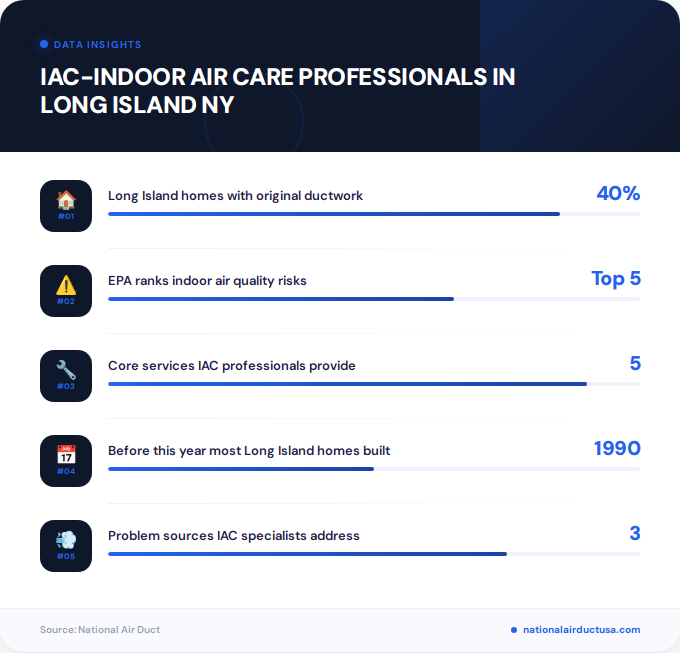
Nearly 40% of Long Island homes built before 1990 still rely on original ductwork that has never been professionally inspected, according to regional HVAC service data. That’s a startling figure when you consider that the EPA ranks indoor air quality among the top five environmental risks to public health. This is exactly the gap that IAC-Indoor Air Care professionals in Long Island, NY are trained to close, and it’s why more homeowners from Sag Harbor to Massapequa are scheduling inspections before small air quality issues become expensive, health-affecting problems.
This guide breaks down what IAC certification actually means, the specific services these specialists perform, the warning signs that should prompt a call, and the factors that shape your final invoice. Whether you’re dealing with a musty basement smell or just want a baseline air quality check, understanding this service end to end will help you make a smarter decision.
What Is an IAC-Indoor Air Care Professional?
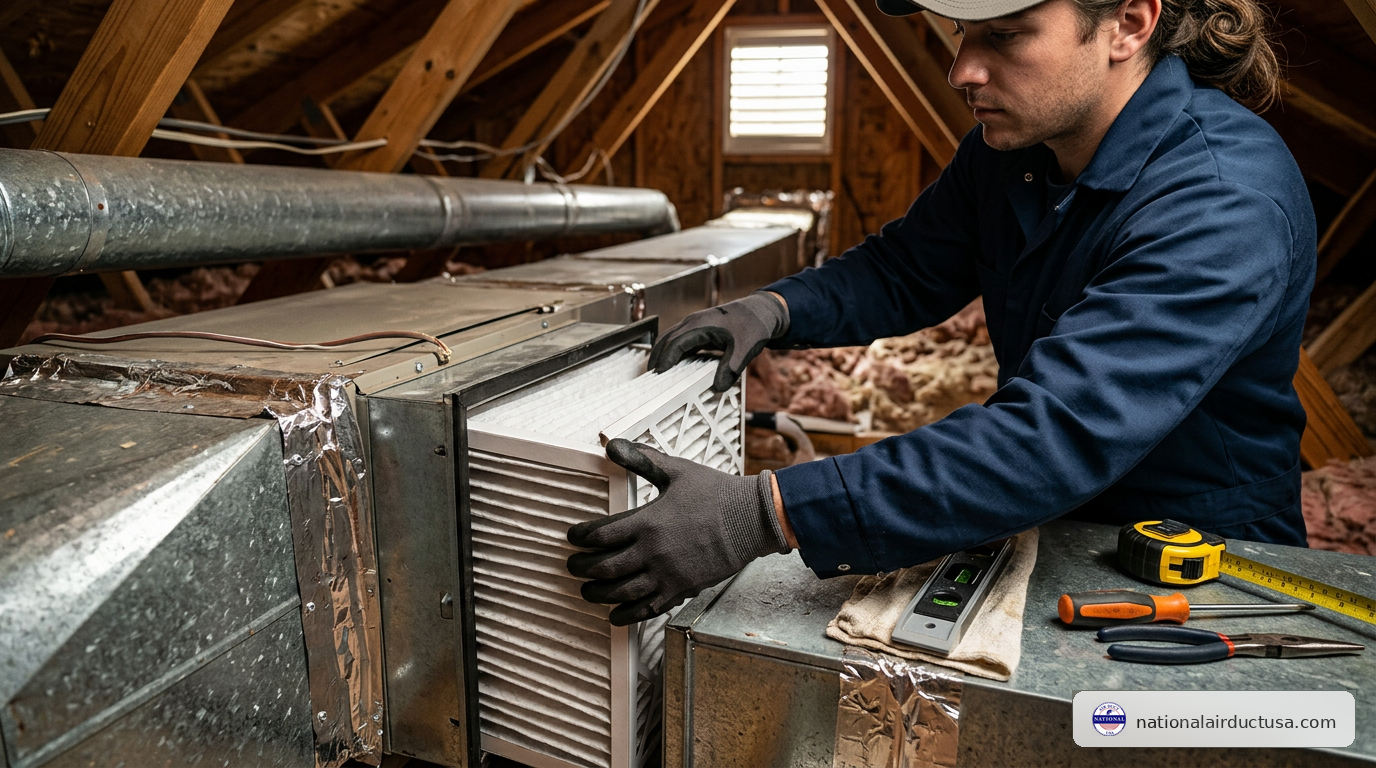
An IAC-Indoor Air Care professional is a technician trained and often certified to assess, clean, and improve the air quality inside residential and commercial buildings. The designation covers a broad skill set: air duct cleaning, mold inspection and remediation, dryer vent cleaning, and HVAC sanitization. Unlike a general handyman or a single-service duct cleaner, an IAC specialist is trained to look at the whole system, not just one component.
On Long Island, this matters because homes often combine older ductwork, finished basements, and humid crawl spaces, all of which interact. A technician who only cleans ducts might miss a mold colony growing behind a return vent, while a mold-only contractor might not understand airflow dynamics well enough to stop the problem from recurring. IAC professionals are trained to connect those dots.
What Services Do IAC Professionals Provide?
IAC-Indoor Air Care professionals in Long Island, NY typically offer a bundled set of services designed to cover every major source of indoor air contamination. Here’s what’s usually included:
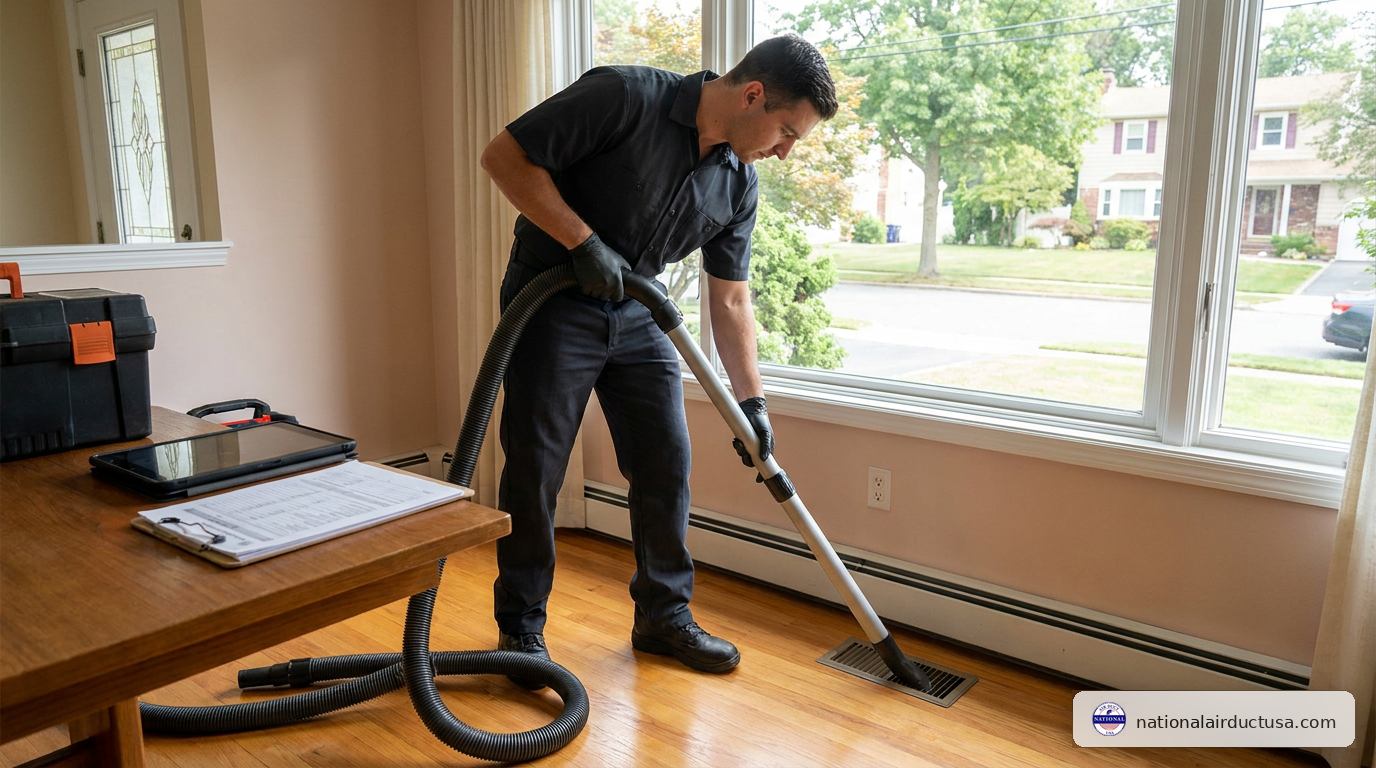
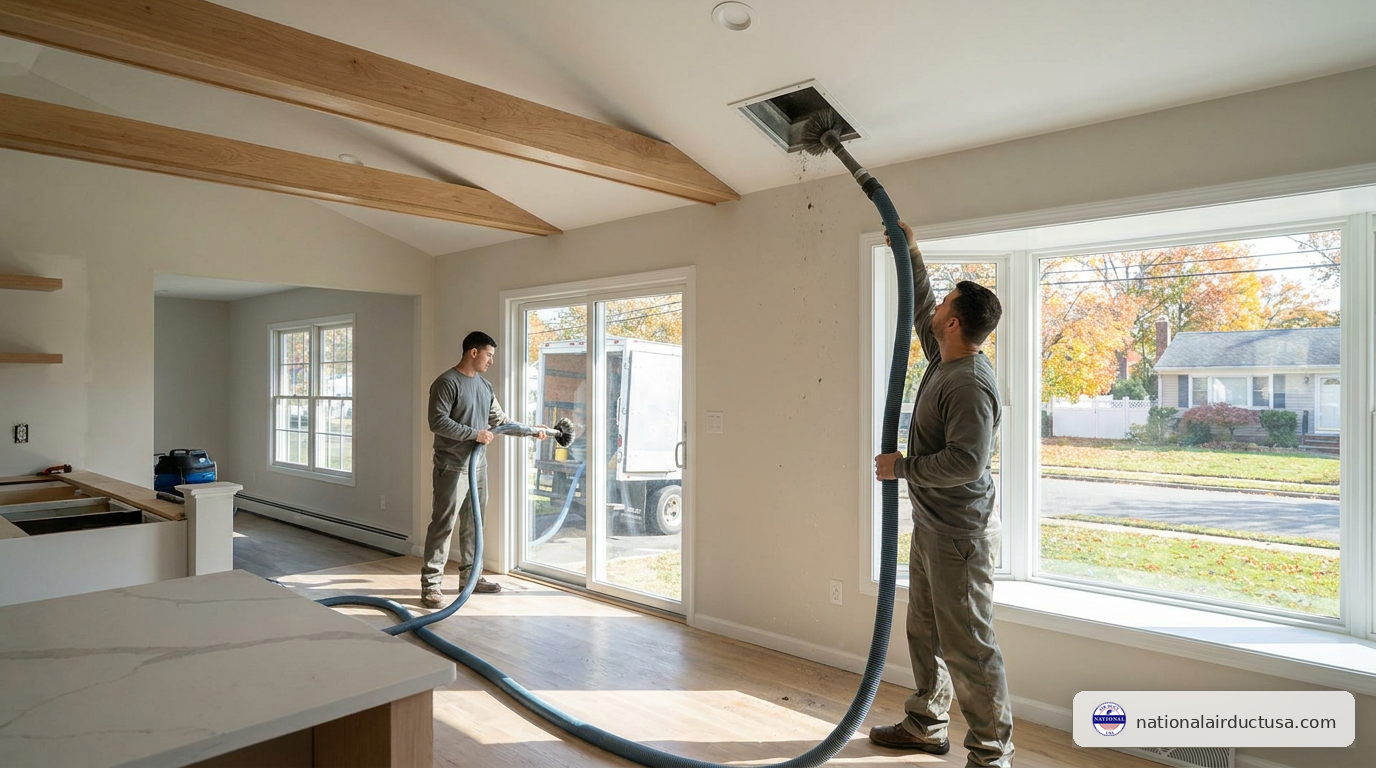
- Air duct cleaning: Removal of dust, debris, pet dander, and biofilm from supply and return ductwork using negative-air vacuum systems and agitation tools.
- Mold inspection and remediation: Visual and sometimes lab-tested assessment of mold growth inside ducts, around coils, or in adjacent crawl spaces and basements.
- Dryer vent cleaning: Clearing lint buildup that creates fire risk and reduces dryer efficiency, a frequent add-on during full-home visits.
- HVAC sanitization: Application of EPA-registered antimicrobial treatments to coils, drain pans, and duct interiors.
- Indoor air quality testing: Measuring particulate levels, humidity, and in some cases VOCs to establish a baseline before and after service.
Many providers also tie this work into broader seasonal maintenance. If you’re trying to understand how these services fit into a full home air quality strategy, the overview at Long Island air quality resources is a useful starting point before booking a visit.
When Should You Call an Indoor Air Care Professional?
Most homeowners wait too long to call, often because the signs of poor indoor air quality are easy to dismiss as “just dust” or “just the season.” Here are the triggers that should move an inspection up your priority list:
- Musty or stale odors that return shortly after airing out the house, especially near vents or in finished basements.
- Visible dust buildup around supply registers that reappears within days of cleaning. This often signals deeper duct contamination, covered in detail in why ducts get so dusty in Long Island homes.
- Recent water damage from a leaky roof, burst pipe, or flooding, since moisture trapped in ductwork can grow mold within 24 to 48 hours.
- Unexplained allergy or asthma flare-ups that improve when you’re away from home.
- A system that’s never been cleaned, particularly in homes older than 10 to 15 years. If you’re unsure where your home stands, this guide on how often air ducts should be cleaned breaks down the general timeline.
- Visible mold around vents, on ceiling tiles, or inside the HVAC cabinet itself, a topic covered thoroughly in how to remove mold in air ducts safely.
If any of these sound familiar, it’s worth reviewing the broader list of signs your air ducts need cleaning before deciding whether a full IAC visit or a simpler duct cleaning is the right fit.
What Does the Service Visit Actually Involve?
A typical IAC service call follows a structured process, not a quick vacuum-and-go. Here’s the general sequence:
- Initial inspection: The technician examines accessible ductwork, the HVAC unit, coils, and drain pans using a camera scope when needed.
- Air quality baseline: Humidity and particulate readings are taken to document the starting condition, especially important if mold is suspected.
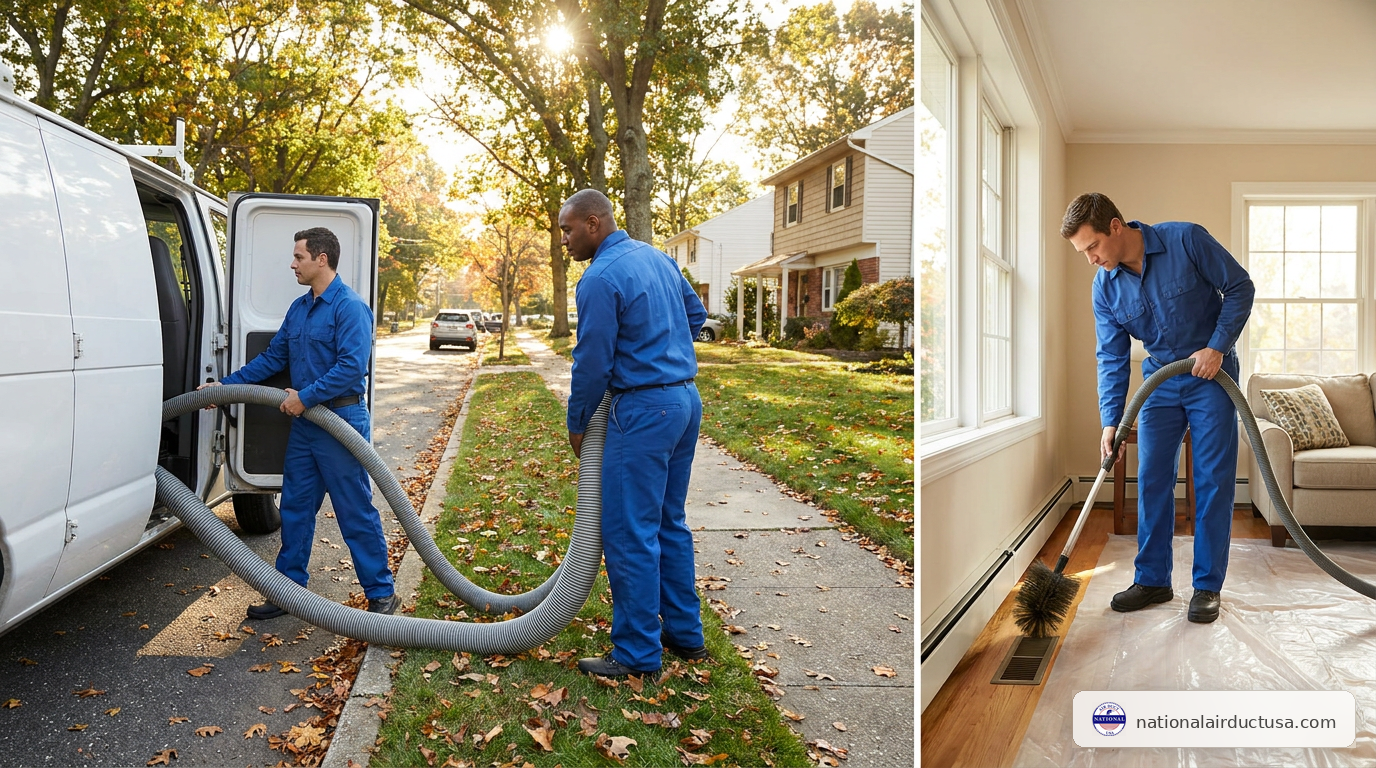
- Containment setup: For jobs involving suspected mold, the crew seals off work areas to prevent spores from spreading to unaffected rooms.
- Cleaning and treatment: High-powered negative-air vacuums pull debris out of the duct system while agitation tools dislodge buildup from interior surfaces. Antimicrobial treatment follows if contamination is present.
- Final walkthrough and documentation: Before-and-after photos, a written summary, and sometimes a second round of air testing to confirm improvement.
For homeowners who want a line-by-line breakdown of what should be included in a reputable visit, the professional duct cleaning checklist is a helpful comparison tool. It’s also smart to review real before-and-after documentation, like the examples in this before and after guide, so you know what results to expect.
What Affects the Price of Indoor Air Care Services?
Pricing for IAC services varies widely based on several factors, and any reputable provider should walk you through these before quoting a number. There is no flat, one-size-fits-all rate because every home’s system is different.
- Size and layout of the ductwork: More vents, longer runs, and multiple HVAC zones increase labor time.
- Condition of the system: Heavy mold contamination, rodent debris, or collapsed sections require more intensive remediation than routine dust removal.
- Accessibility: Crawl spaces, tight attics, and finished basements with limited access can add time and specialized equipment needs.
- Scope of service: A basic duct cleaning costs less than a bundled package that includes mold remediation, sanitization, and dryer vent cleaning.
- Urgency: Emergency calls following water damage or active mold growth may carry different scheduling priorities than routine seasonal maintenance.
- Testing and documentation: Lab-verified mold testing adds cost compared to a visual-only inspection.
Because pricing varies based on your specific project, the most reliable way to budget is a written, on-site quote. For a step-by-step look at how estimates are built, see this homeowner checklist for getting an air duct cleaning cost estimate.
| Service Type | What Drives the Final Price |
|---|---|
| Standard duct cleaning | Number of vents, duct length, home size |
| Mold remediation | Extent of contamination, containment needs, testing |
| Dryer vent cleaning | Vent length, number of bends, roof access |
| Full IAC bundle | Combined scope, urgency, documentation requested |
Why Does Long Island’s Climate Matter So Much?
Long Island’s coastal humidity, salt air, and seasonal swings between damp summers and cold, heating-heavy winters create ideal conditions for mold growth and dust accumulation inside HVAC systems. Homes in Nassau and Suffolk counties, from Huntington to the East End near Sag Harbor, often deal with basements and crawl spaces that trap moisture far longer than inland regions.
That moisture doesn’t stay put. It travels through return air ducts and settles on coils, creating the dark, damp environment mold needs to spread. This is one reason fall and early winter are such critical windows for inspection, a point explored further in what happens if you skip duct cleaning this fall and in winter mold risks in air ducts.
Timing also plays a role in cost and scheduling. Many Long Island homeowners find that booking service in late fall, before the heating season peaks, avoids the backlog that hits in January and February. For more on ideal timing, see the best time to clean air ducts according to licensed pros.
How Do You Choose the Right IAC Provider?
Not every company advertising “indoor air care” carries the same training or equipment standards. Look for providers who can document certification, carry liability insurance, and use HEPA-filtered negative-air equipment rather than basic shop vacuums.
It’s also worth asking how a company’s technicians are trained to handle the specific demands of coastal New York systems, since humidity-driven mold behaves differently than dry-climate dust buildup. For a deeper look at what separates licensed, well-equipped crews from budget operators, see what sets licensed duct cleaners apart in regional HVAC systems. You can also learn more about a provider’s background and service area on pages like this company overview or by visiting the main site directly to review service offerings.
Key Takeaways
- IAC-Indoor Air Care professionals combine duct cleaning, mold remediation, dryer vent service, and air quality testing into one coordinated visit.
- Long Island’s humid, coastal climate and aging housing stock make this bundled approach more effective than single-service contractors.
- Musty odors, recurring dust, recent water damage, and allergy flare-ups are the most common reasons homeowners call.
- A proper service visit includes inspection, baseline testing, containment when needed, cleaning, treatment, and documented results.
- Pricing depends on duct length, system condition, accessibility, and scope of service, not a flat rate.
- Scheduling before peak winter heating season can help avoid backlogs and catch problems early.
- Always verify certification, insurance, and equipment standards before hiring a provider.
People Also Ask
What does IAC stand for in air duct cleaning?
IAC stands for Indoor Air Care, a designation used by HVAC and air quality technicians who specialize in duct cleaning, mold remediation, and overall indoor air quality improvement rather than a single isolated service.
Is indoor air care the same as mold remediation?
Mold remediation is one part of indoor air care, not the whole thing. IAC professionals also handle duct cleaning, dryer vent service, and air quality testing alongside mold treatment when needed.
How do I know if my air ducts have mold?
Common signs include musty odors near vents, visible dark spots around registers, and allergy symptoms that improve when away from home. A camera inspection by a trained technician is the most reliable way to confirm mold presence.
How often should Long Island homeowners schedule indoor air care service?
Most homes benefit from a full inspection every one to two years, though homes with pets, recent renovations, or past water damage may need more frequent visits due to the region’s humidity.
Can dirty air ducts actually make you sick?
Yes, dirty ducts can circulate dust, mold spores, and allergens that trigger respiratory irritation, worsen asthma, and contribute to chronic allergy symptoms, especially in homes with poor ventilation.
Frequently Asked Questions
What makes an IAC professional different from a regular duct cleaner?+
An IAC professional is trained across multiple disciplines, including mold assessment, air quality testing, and sanitization, rather than offering duct cleaning alone. This broader training allows them to catch interconnected issues that a single-service technician might miss.
How long does a typical indoor air care visit take?+
Most standard visits take a few hours, but homes with extensive ductwork, multiple HVAC zones, or active mold remediation can take significantly longer. Scheduling usually includes time for inspection, cleaning, and final documentation.
Do I need to leave the house during an IAC service visit?+
You typically do not need to leave for routine duct cleaning, but if mold remediation with containment is involved, your technician may recommend staying in a different part of the home or stepping out temporarily during treatment.
Will cleaning my ducts actually lower my energy bills?+
Clean ducts allow your HVAC system to circulate air more efficiently, which can reduce strain on the system and modestly improve energy use, though savings vary based on your system’s age and overall condition.
What should I ask before hiring an indoor air care company?+
Ask about certification, insurance coverage, the type of equipment used, and whether they provide before-and-after documentation. A reputable provider will walk you through their process and offer a written quote before starting work.
How much does indoor air care service cost on Long Island?+
Cost depends on factors like duct length, system condition, accessibility, and whether mold remediation or testing is required. Because every home differs, the most accurate way to get pricing is to request a free, written quote tailored to your specific property.
Related: How to Prepare for Air Duct Cleaning in Long Island NY: A Step-by-Step Guide
Indoor air quality isn’t something to guess about, especially in a region where humidity and aging ductwork work against you year-round. If you’re noticing odors, dust, or allergy symptoms that won’t go away, reach out through the contact page to schedule an inspection and get a written quote tailored to your home.