Quick Answer
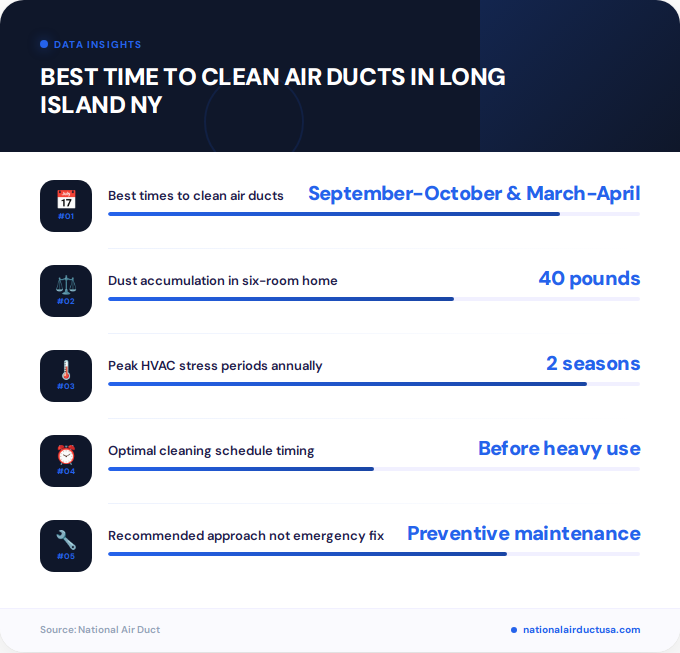
The best time to clean air ducts in Long Island NY is during early fall (September to October) or early spring (March to April), right before your HVAC system shifts into heavy heating or cooling use. Scheduling around these transition windows lets a licensed technician catch dust, pollen, and summer humidity buildup before the system runs continuously. Homeowners who book ahead of peak season also avoid the scheduling backlog that hits most Long Island duct cleaning companies in late November and June.
Most homeowners wait until they notice a problem, a musty smell, visible dust on vents, or a sudden spike in allergy symptoms, before they think about duct cleaning. But the best time to clean air ducts in Long Island NY isn’t when something is already wrong. It’s during the quiet windows between heating and cooling seasons, when a technician can inspect, clean, and verify your system before it’s under full load.
According to the EPA, the average six-room home can accumulate up to 40 pounds of dust, dander, and debris inside its ductwork over several years of normal use. On Long Island, where humidity swings between a muggy summer and a damp, raw winter, that debris doesn’t just sit there. It becomes a breeding ground for mold, dust mites, and bacteria that get redistributed through every vent in the house. Timing your cleaning right isn’t a luxury, it’s basic preventive maintenance that protects both your HVAC equipment and your family’s air quality.
Why Does Timing Matter for Air Duct Cleaning?
Air ducts don’t fail on a schedule, but HVAC systems have predictable stress points. On Long Island, that means two demanding seasons each year: a humid, pollen-heavy summer that runs the AC nearly nonstop, and a cold, damp winter that keeps the furnace or heat pump running for months. Cleaning right before either of these peak seasons gives your system a clean start when it needs it most.
A duct system full of debris has to work harder to push air through, which raises energy use and strains components like the blower motor. Scheduling service during the shoulder seasons, meaning early fall and early spring, also means shorter wait times, since most residential contractors in Nassau and Suffolk Counties see their call volume spike right as temperatures turn extreme.
“On Long Island, the homes that stay problem-free are the ones that treat duct cleaning like an oil change, not an emergency fix. The system is already stressed by the time someone calls us in July or January. The smarter move is getting ahead of it in the shoulder months.”
What Does Each Season Mean for Long Island Ductwork?
Long Island’s coastal climate creates distinct seasonal pressures on HVAC systems that differ from inland regions. Here’s how each season typically affects ductwork across communities from Huntington to Babylon to the East End.
| Season | What Happens to Ducts | Cleaning Priority |
|---|---|---|
| Spring (Mar-May) | Pollen infiltration, system restart after winter dormancy | High, before AC season begins |
| Summer (Jun-Aug) | Humidity buildup, condensation, mold risk | Moderate, monitor for moisture issues |
| Fall (Sep-Nov) | Dust settling, leaves/debris near outdoor units | High, before heating season begins |
| Winter (Dec-Feb) | Constant heating cycles circulate stagnant dust | Low priority for new cleaning, good for inspection |
Since this article publishes in early November 2026, Long Island homeowners are sitting right at the edge of the fall window. Heating systems are beginning to kick on regularly, and this is one of the last practical stretches before the deep cold sets in and contractors get booked solid. If your ducts haven’t been serviced since last spring, now is a reasonable moment to get on the schedule. For a deeper look at what accumulates in warmer months, see why ducts get so dusty in Long Island NY.
Should You Clean Ducts Before or After Heavy HVAC Use?
The general rule licensed technicians follow is simple: clean before, not after. Cleaning before peak heating or cooling season means contaminants get removed before they’re aerosolized throughout the home for months at a time.
Waiting until after a tough winter or summer often means dealing with compacted debris, moisture damage, or even mold colonies that had weeks to establish themselves. This is especially true on Long Island, where coastal humidity can linger in ductwork long after the weather cools. If you’ve just come through a humid stretch and noticed musty odors, don’t wait for the “ideal” season. Mold problems need attention immediately, as outlined in this guide to removing mold in air ducts safely in Long Island NY.
- Before summer: Removes winter dust before AC recirculates it through bedrooms and living areas.
- Before winter: Clears summer humidity residue before the furnace runs nonstop for months.
- After renovation: Construction dust and drywall debris should be cleaned out immediately, regardless of season.
- After moving in: New homeowners should never assume a previous owner maintained the ducts properly.
What Does a Licensed Long Island Contractor Do Differently?
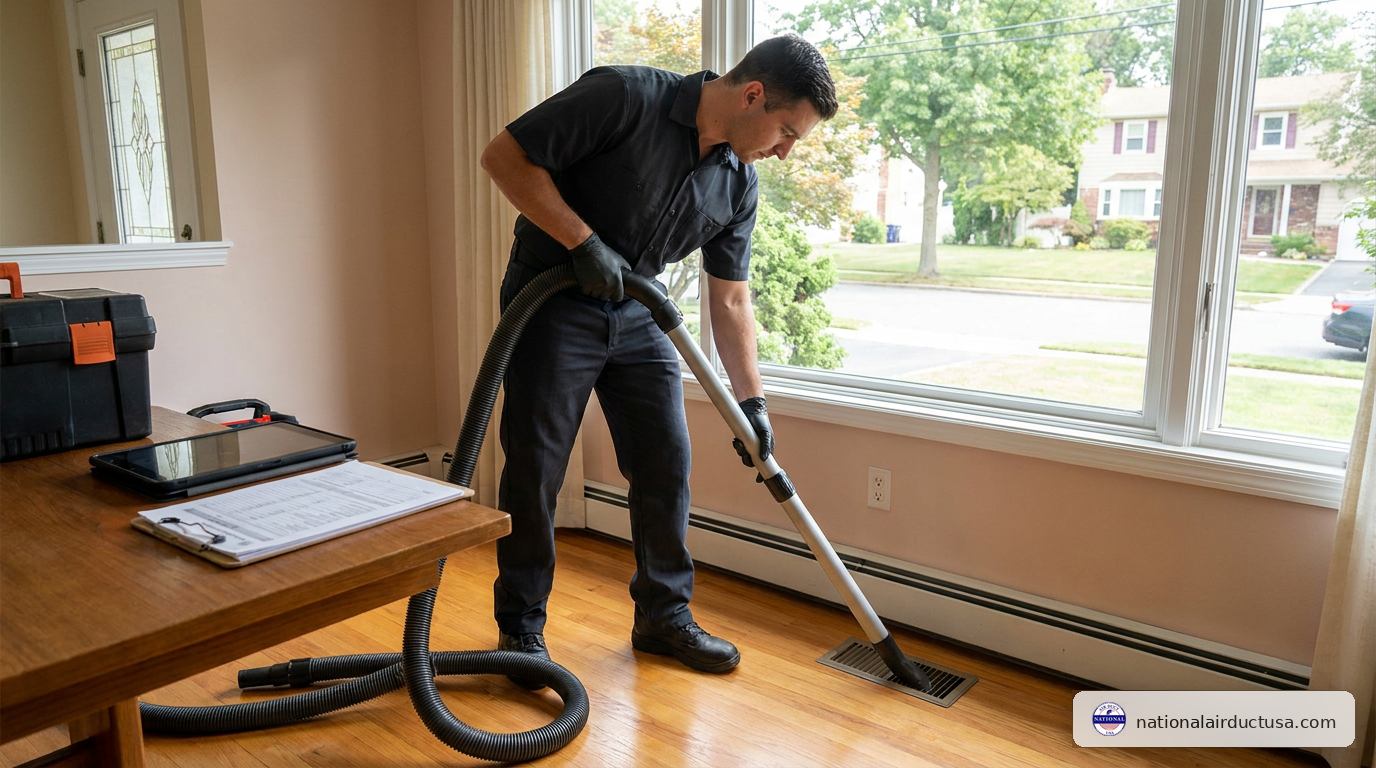
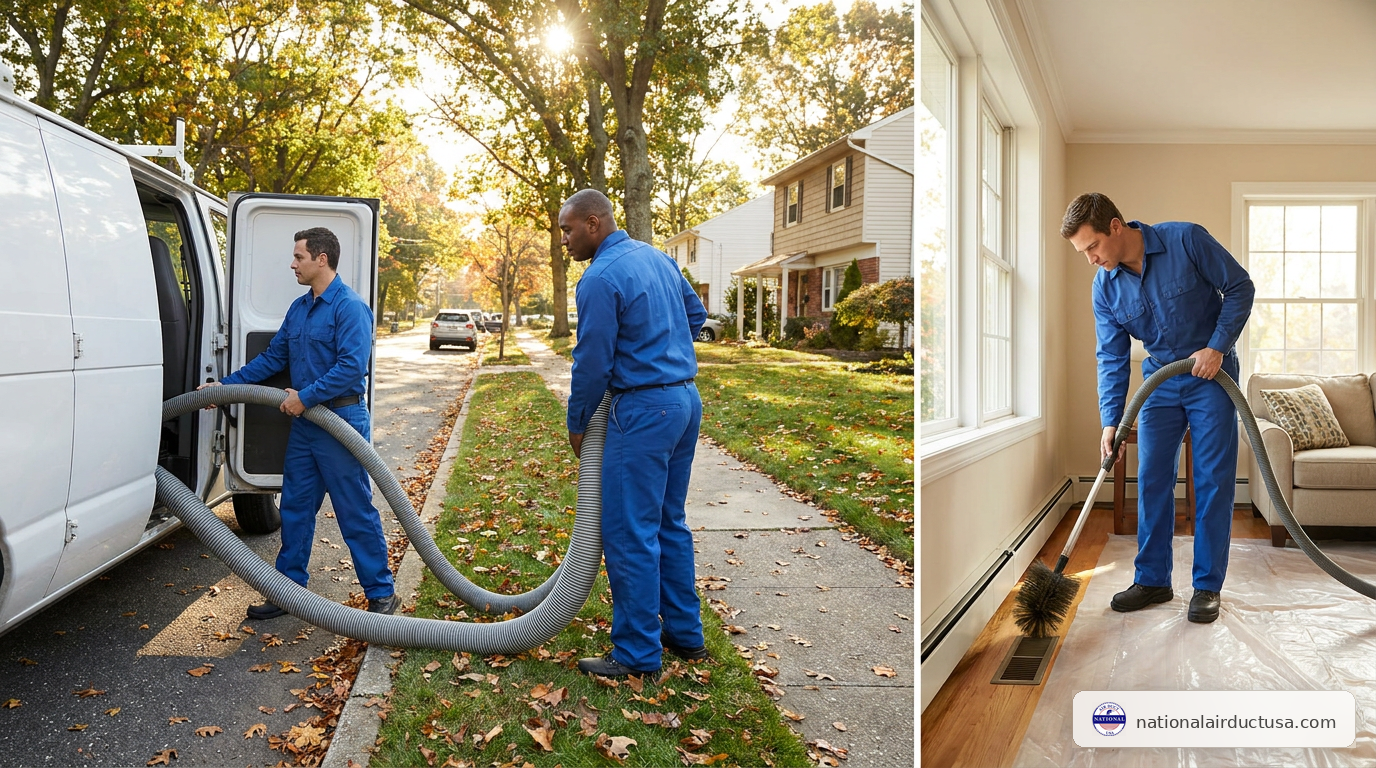
Not every company that shows up with a truck-mounted vacuum follows the same standards. A licensed, properly trained contractor follows NADCA (National Air Duct Cleaners Association) guidelines, which outline specific inspection and cleaning protocols that unlicensed operators often skip entirely.
Here’s what separates a thorough, trustworthy process from a quick sales pitch:
- Full system inspection first. A reputable technician inspects supply and return lines, the air handler, and coils before recommending any service, rather than quoting a flat price over the phone.
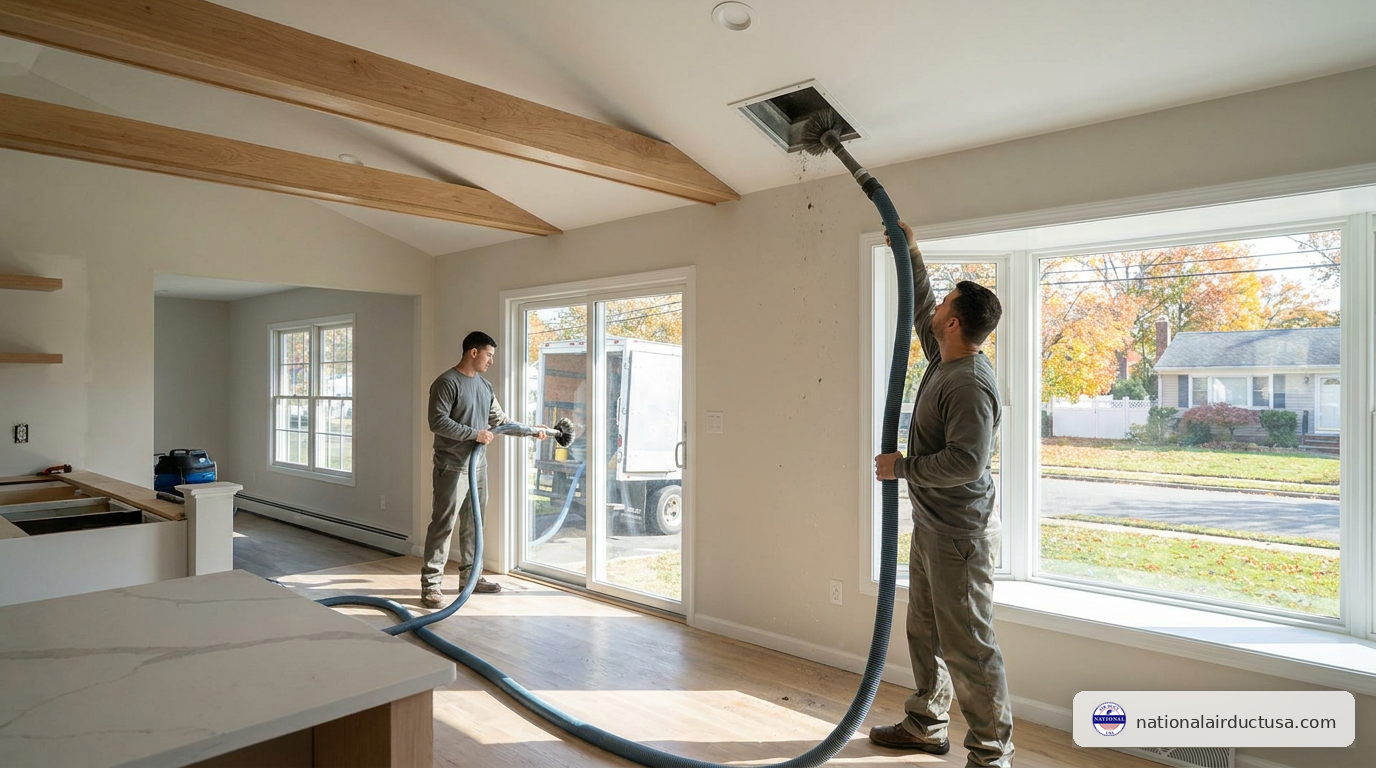
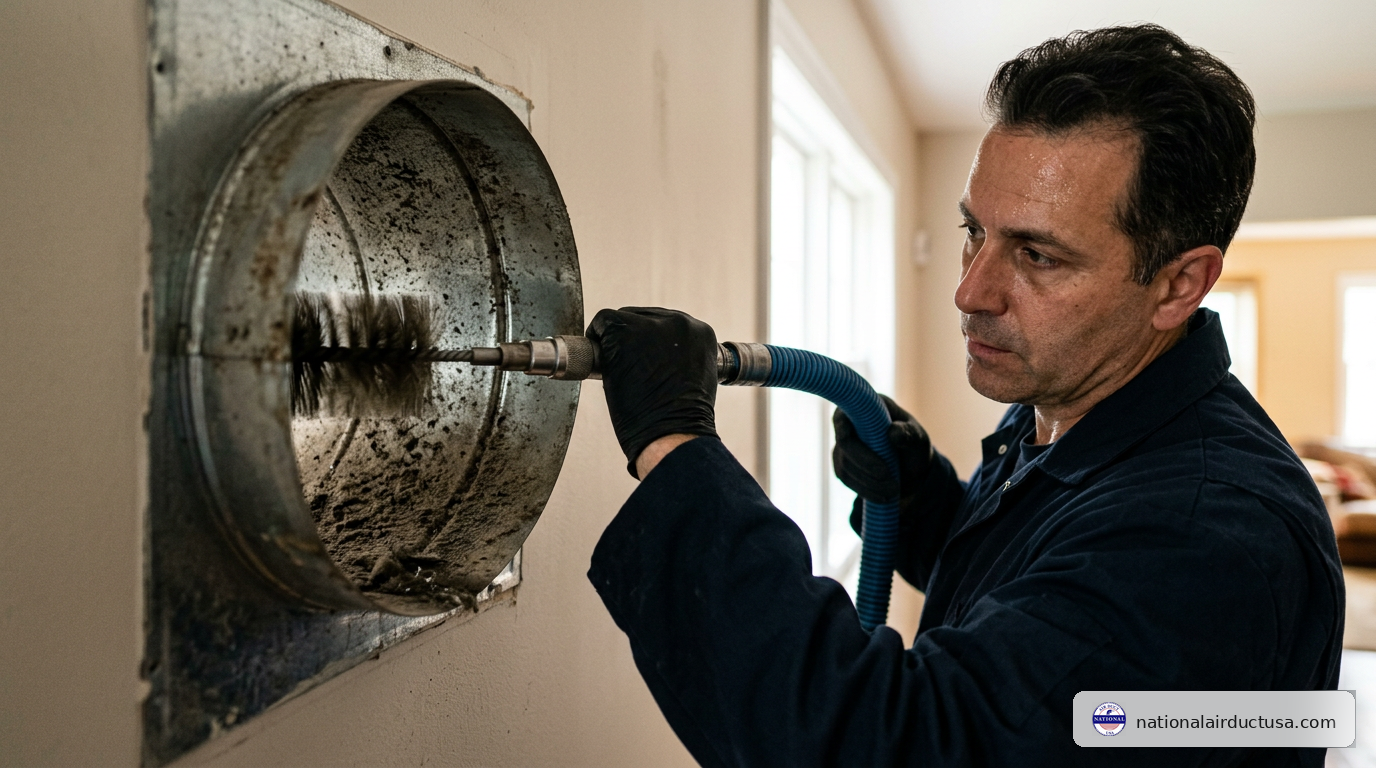
- Negative pressure containment. Proper equipment creates negative pressure inside the ductwork so dislodged debris is pulled out, not pushed further into your home’s air.
- Photo or video documentation. Good contractors show before-and-after images so you can see the actual condition of your ducts, not just take their word for it.
- Agitation tools matched to duct material. Flexible, sheet metal, and fiberboard ducts all require different brush and air-whip techniques to avoid damage.
- Written scope of work. You should receive a clear breakdown of what’s included, such as vents, returns, the main trunk line, and the air handler, before work begins.
If you want a visual sense of what quality work looks like, this before-and-after guide with real results in Long Island NY shows the kind of transformation a thorough job should deliver. For a line-by-line breakdown of what’s supposed to happen during a visit, review this professional duct cleaning checklist.
How Do Licensing, Insurance, and Warranties Protect You?
Licensing and insurance aren’t just paperwork, they’re the difference between a protected homeowner and one exposed to liability. In New York, HVAC-adjacent contractors operating on Long Island should carry general liability insurance and, depending on the scope of work, appropriate trade licensing recognized by Nassau and Suffolk County regulations.
A trustworthy company will readily provide proof of insurance and will stand behind their work with some form of satisfaction guarantee or workmanship warranty. This matters because duct cleaning involves physically accessing sealed systems, sometimes cutting small access points that need to be properly resealed afterward. Sloppy resealing can lead to air leaks that undo any efficiency gains from the cleaning itself.
Written estimate: Before work begins
Access point resealing: Included, not an upsell
Workmanship guarantee: Standard practice
Flat phone quotes: No inspection first
Pressure-sell add-ons: Chemical fogging, sealants
No documentation: No before/after proof
Pricing for duct cleaning varies widely based on the size of your home, the number of vents and returns, the condition of the ductwork, and whether mold remediation or repairs are needed. Rather than relying on a generic number, ask any contractor for a written cost estimate after an in-home or video inspection. This protects you from both lowball bait-and-switch tactics and unnecessary upselling.
How Often Should Scheduling Happen in Long Island Homes?
NADCA and the EPA generally recommend duct cleaning every three to five years for the average home, though this varies based on pets, smokers, renovations, allergy sufferers in the household, and whether you live near construction or high-traffic roads common throughout Nassau and Suffolk Counties.
Homes near the water, including areas along the North Shore and South Shore, may see faster humidity-related buildup due to salt air and coastal moisture. If you’re unsure where your home falls, this guide on how often to clean air ducts in Long Island NY breaks down the variables in more detail.
- Standard homes: every 3 to 5 years
- Homes with pets or smokers: every 2 to 3 years
- Post-renovation: immediately after dust-generating work
- Allergy or asthma households: annually or as symptoms dictate
Whatever your interval, the scheduling logic stays the same: book during shoulder season, not during a heat wave or cold snap, when demand is highest and appointment slots are scarce. Many Long Island homeowners also bundle a complete HVAC maintenance visit with their duct cleaning to maximize the value of a single service call.
Key Takeaways
- The best time to clean air ducts in Long Island NY is early fall or early spring, ahead of peak heating and cooling demand.
- Waiting until after a harsh season often means dealing with mold, compacted debris, or odor issues that could have been prevented.
- Licensed contractors follow NADCA protocols, including full inspections, negative pressure containment, and documented before-and-after results.
- Insurance, written estimates, and workmanship guarantees separate trustworthy contractors from fly-by-night operators.
- Most homes need cleaning every 3 to 5 years, though pets, smoking, renovations, and coastal humidity can shorten that window.
- Pricing depends on home size, duct condition, and scope, always request a written, inspection-based quote rather than a flat phone estimate.
- Booking during shoulder seasons avoids the scheduling backlog that hits most Long Island contractors in peak summer and winter months.
People Also Ask
Is it better to clean air ducts in summer or winter?
Neither is ideal. The better strategy is cleaning right before summer or winter begins, in spring or fall, so your system starts each demanding season with clean ductwork rather than being serviced mid-use.
How do I know if my air ducts need cleaning now?
Visible dust buildup around vents, musty odors when the HVAC kicks on, and increased allergy symptoms indoors are common signs. A full breakdown of warning signs is available in this signs your air ducts need cleaning guide.
Does duct cleaning help with allergies in Long Island?
Yes, removing accumulated dust, pollen, and dander from ductwork can reduce airborne allergens, especially during high pollen months common to Long Island’s spring and fall seasons.
Should I clean ducts before moving into a new Long Island home?
Yes, it’s strongly recommended since you have no way of verifying the previous owner’s maintenance history. A pre-move-in cleaning gives you a documented clean baseline from day one.
Frequently Asked Questions
What is the best time of year to clean air ducts in Long Island NY?+
Early fall and early spring are ideal because they fall right before peak heating and cooling demand. This timing lets a technician address debris and moisture buildup before your system runs continuously for months.
How long does a professional duct cleaning take?+
Most residential jobs take between two and four hours, depending on home size, number of vents, and ductwork accessibility. Larger homes or systems requiring mold remediation may take longer.
Is air duct cleaning worth it for Long Island homeowners?+
For most homes, yes, particularly those with pets, allergy sufferers, recent renovations, or homes near the coast where humidity accelerates buildup. A licensed inspection can confirm whether your specific ducts need service now or can wait.
How much does air duct cleaning cost in Long Island NY?+
Pricing varies based on home size, duct condition, accessibility, and whether mold or pest contamination is present. The most reliable way to know your cost is to request a written quote after an in-home inspection.
Can dirty air ducts affect indoor air quality on Long Island?+
Yes, dust, pollen, pet dander, and mold spores trapped in ductwork get recirculated every time the system runs. Learn more about regional air quality factors at this Long Island air quality resource.
What happens if I skip duct cleaning for several years?+
Skipping cleaning can lead to reduced airflow, higher energy bills, and potential mold growth, especially after humid summers or damp falls. This guide on what happens if you don’t clean ducts this fall covers the specific risks in more detail.
What makes a duct cleaning company trustworthy?+
Look for proof of insurance, NADCA-aligned cleaning methods, written estimates after inspection, and a workmanship guarantee. You can learn more about what separates licensed professionals from the rest at this guide on licensed duct cleaners.
Related: Indoor Air Care Professionals (IAC) in Long Island NY: What They Do and Why You Need One
Related: How to Prepare for Air Duct Cleaning in Long Island NY: A Step-by-Step Guide
Related: Air Duct Cleaning After Construction in Long Island NY: 5 Questions Answered
Related: Air Duct Cleaning Nassau County NY: Process, Cost, and Results for Long Island Homeowners
Timing your duct cleaning around Long Island’s seasonal rhythms isn’t about superstition, it’s about working with your HVAC system instead of against it. Whether you’re prepping for the first cold snap of winter or planning ahead for next spring’s pollen season, the smartest move is booking service before demand peaks, not after a problem forces your hand. Visit National Air Duct or explore our about us page to learn more about our process, then contact our team for a free, inspection-based quote tailored to your home.